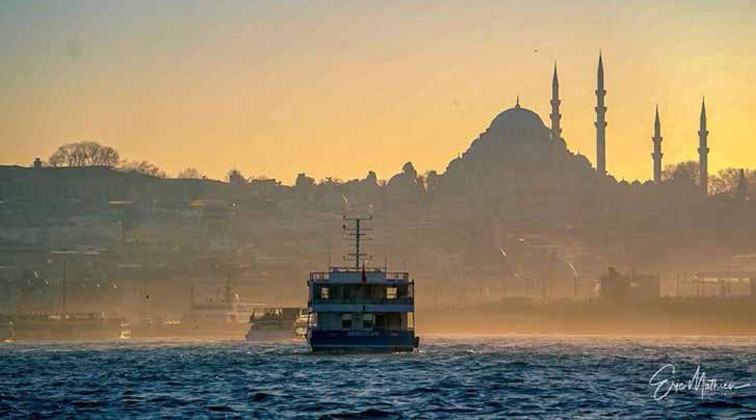
By ANNA MARIE MATEESCU GRAND ADVENTURE One of my dreams is to visit the historical country of Turkey, officially known as the Republic of Turkey, established in 1923. It spans both Europe and Asia, making it a unique country. This distinctive geographical position has predisposed Turkey to acquire a rich cultural heritage and a diverse population. Turkey occupies a key crossroads, influencing politics, trade, and culture. Its two regions came under Roman control and later became the center of the Byzantine Empire. The land that forms today’s Republic includes Anatolia, the Asian part, and Eastern Thrace, its European portion. These two regions, once separate politically, fell under Roman rule centuries ago and later became the heart of the Byzantine Empire. Walking through the country, I sense how these layers of history Roman, Byzantine, and beyond still echo in its cities, landscapes, and culture. Turkey lingers in my thoughts long after leaving. History threads through every corner and shapes every skyline. A classic example is Ankara, the capital. Yet Istanbul pulses with its own distinct rhythm. I walk along streets heavy with stories. Alleys twist between old houses, and worn cobblestones mark the passage of countless footsteps. Life swirls around me, and the past presses close. As a writer, I find it impossible not to be moved by its presence. Every corner feels alive with echoes of sultans and poets, traders and dreamers who left their mark on its skyline. Inside the Hagia Sophia, or standing before the Blue Mosque, I don’t just see stone and symmetry; I feel centuries breathing around me. Yet for all its history, Istanbul feels strikingly modern. Every corner of Istanbul carries history, and its skyline reflects centuries of change. I walk through Istanbul, and its history surrounds me. Every...... Read more on Full Issue!